
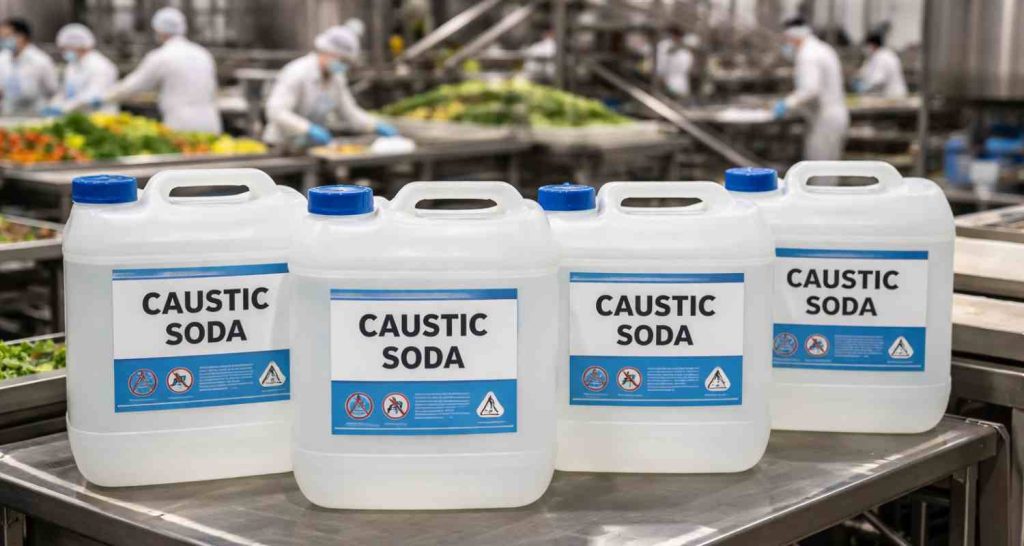
Caustic Soda in Food Processing Industry in Australia
The use of caustic soda in food processing plays a critical role across Australia’s modern food industry. It supports hygiene, improves product quality, and ensures compliance with strict food safety standards. From large-scale manufacturing plants to smaller regional facilities, it remains an essential chemical for safe, efficient, and reliable operations across different food sectors.
Australia’s food sector is highly regulated and quality-driven. Therefore, processors rely on proven chemicals to maintain hygiene and consistency in every production stage. Caustic soda, also known as sodium hydroxide, is widely used because of its strong cleaning power and pH-adjusting properties, which help maintain high operational standards.
Key Takeaways
- Widely used for cleaning, peeling, and pH control.
- Supports strict hygiene standards across food sectors.
- Essential for dairy, beverage, and meat processing.
- Improves efficiency and reduces production time.
- Helps maintain consistent product quality.
- Requires careful handling due to its corrosive nature.
- Supports wastewater treatment and environmental compliance.
- Cost-effective and versatile for industrial use.
- Plays a role in automated cleaning systems.
- Aligns with Australian food safety regulations.
Overview of Caustic Soda in the Food Industry
Caustic soda is a highly alkaline substance. It is widely used in food processing for cleaning, peeling, and pH control. Moreover, it helps remove contaminants and improve food safety standards.
Chemical Properties and Functionality
Caustic soda dissolves easily in water. It generates heat and forms a strong alkaline solution. Therefore, it breaks down fats, proteins, and organic matter effectively.
This makes it ideal for industrial cleaning. In addition, it supports consistent production quality.
Common Forms Used in Industry
It is available in solid flakes, pellets, and liquid solutions. Many facilities prefer caustic soda liquid because it is easier to handle and mix.
Liquid form reduces dust risks. It also improves dosing accuracy in automated systems.
Importance of Australian Food Processing
Australia has strict food safety laws. Therefore, processors must use reliable chemicals. Caustic soda meets these requirements due to its effectiveness and consistency.
It also supports compliance with national food standards and hygiene protocols.
Applications Across Food Processing Sectors
Caustic soda is used across multiple food categories. Its versatility makes it valuable for different processes.
Cleaning and Sanitisation
Food processing equipment must always remain clean. Caustic soda removes grease, fats, and protein residues effectively.
It is commonly used in Clean-in-Place systems. These systems ensure equipment is cleaned without dismantling.
Food Preparation Processes
Caustic soda helps in peeling fruits and vegetables. It softens outer skins quickly. Therefore, processing becomes faster and more efficient.
This method reduces waste and improves product consistency.
pH Control in Production
Maintaining correct pH levels is essential. Caustic soda helps regulate acidity in food products.
This ensures stability and improves shelf life. It also enhances product safety.
Role in Beverage Manufacturing
Beverage production requires strict hygiene standards. Caustic soda plays a major role in maintaining cleanliness.
Cleaning Brewing Equipment
Breweries use caustic soda to clean tanks and pipelines. It removes yeast residues and organic build-up.
This ensures product quality remains consistent across batches.
Bottle and Container Cleaning
Bottling plants use caustic solutions to clean containers. It removes labels, residues, and contaminants.
Clean containers prevent contamination during filling.
Maintaining Hygiene Standards
Australian beverage companies follow strict hygiene guidelines. Caustic soda helps meet these requirements efficiently.
It ensures equipment remains free from harmful microorganisms.
Use in Dairy Processing
The dairy industry relies heavily on cleanliness and sanitation. Caustic soda is essential for maintaining hygiene.
Cleaning Milk Processing Equipment
Milk residues can build up quickly. Caustic soda removes these deposits effectively.
It ensures equipment remains safe for continuous use.
Preventing Bacterial Growth
Alkaline cleaning solutions reduce microbial growth. This helps maintain product safety.
It also extends the shelf life of dairy products.
Supporting Quality Assurance
Consistent cleaning improves product quality. It ensures compliance with food safety standards.
Therefore, dairy processors depend on reliable cleaning solutions.
Application in Meat and Poultry Processing
Meat processing facilities require strict sanitation. Caustic soda supports hygiene and operational efficiency.
Equipment Degreasing
Meat processing generates significant fat residues. Caustic soda breaks down these fats quickly.
This ensures equipment remains clean and functional.
Surface Cleaning
Processing areas must remain sanitised. Caustic soda removes organic matter from surfaces effectively.
Clean surfaces reduce contamination risks.
Waste Management Support
It helps treat waste streams by breaking down organic material. This supports environmental compliance.
Use in Fruit and Vegetable Processing
Fresh produce processing involves cleaning, peeling, and preparation. Caustic soda improves efficiency in these steps.
Peeling Applications
Caustic soda loosens the skins of fruits and vegetables. This allows easy removal without damaging the product.
It improves processing speed and reduces manual labour.
Cleaning Produce
It helps remove dirt, pesticides, and residues. Clean produce ensures food safety.
It also enhances product appearance.
Improving Processing Efficiency
Faster peeling and cleaning reduce production time. This increases overall efficiency.
Safety Standards and Regulations in Australia
Australia maintains strict food safety regulations. Chemical use must comply with national guidelines.
Regulatory Bodies and Guidelines
Food Standards Australia New Zealand oversees food safety standards. Processors must follow these regulations strictly.
Safe Handling Practices
Workers must use protective equipment when handling caustic soda. Proper training is essential.
Safe handling reduces workplace risks.
Storage and Transport Requirements
Caustic soda must be stored in corrosion-resistant containers. It must also be transported safely.
This prevents accidents and ensures compliance.
Environmental Considerations
Sustainability is important in Australia’s food industry. Chemical use must align with environmental standards.
Wastewater Treatment
Caustic soda helps neutralise acidic wastewater. This supports safe discharge into the environment.
It ensures compliance with environmental regulations.
Reducing Environmental Impact
Proper dosing reduces chemical waste. Efficient systems minimise environmental harm.
Compliance with Environmental Laws
Australian authorities enforce strict environmental laws. Processors must manage chemicals responsibly.
Advantages for Food Processing Facilities
Caustic soda offers several operational benefits. These advantages make it widely used across industries.
High Cleaning Efficiency
It removes tough residues quickly. This reduces cleaning time and labour costs.
Cost-Effective Solution
Caustic soda is affordable and widely available. It provides strong performance at a reasonable cost.
Versatility Across Applications
It can be used for cleaning, peeling, and pH control. This makes it highly versatile.
Challenges and Risk Management
Despite its benefits, caustic soda requires careful handling. Risk management is essential.
Corrosive Nature
Caustic soda can cause burns if mishandled. Therefore, safety measures are necessary.
Equipment Compatibility
It can corrode certain materials. Facilities must use compatible equipment.
Worker Training Requirements
Proper training ensures safe usage. It also reduces workplace accidents.
Industry Trends in Australia
The food processing industry continues to evolve. Chemical usage is also improving.
Automation in Cleaning Systems
Automated systems improve accuracy and efficiency. They also reduce chemical waste.
Focus on Sustainability
Processors are adopting eco-friendly practices. This includes efficient chemical usage.
Innovation in Food Safety
New technologies improve hygiene and monitoring. Caustic soda remains part of these systems.
Economic Impact on the Food Industry
Caustic soda contributes to operational efficiency. It also supports economic growth in the sector.
Supporting Large-Scale Production
Efficient cleaning allows continuous production. This improves output and profitability.
Reducing Operational Costs
Faster cleaning reduces downtime. This lowers overall production costs.
Enhancing Product Quality
Consistent processes improve product quality. This strengthens market competitiveness.
FAQs
What is caustic soda used for in food processing?
It is used for cleaning equipment, peeling produce, and controlling pH levels. These functions improve hygiene and product quality. It also helps meet food safety standards in Australia.
Is caustic soda safe for food processing?
Yes, it is safe when used correctly. It must follow strict guidelines and proper handling procedures. Residues are removed during processing to ensure food safety.
Why is it used for cleaning equipment?
It effectively removes grease, fats, and proteins. This ensures equipment remains hygienic. Clean equipment reduces contamination risks.
How does it help in fruit and vegetable processing?
It loosens skin for easy peeling. This improves efficiency and reduces waste. It also helps clean produce effectively.
Are there environmental concerns?
Improper use can harm the environment. However, controlled use and proper treatment reduce risks. Many facilities follow strict environmental guidelines.
Conclusion
Caustic soda remains a vital component in Australia’s food processing industry. It supports hygiene, efficiency, and product quality across multiple sectors. Its versatility makes it suitable for cleaning, peeling, and pH control.
However, safe handling and regulatory compliance are essential. Australian processors follow strict standards to ensure safe use. As the industry evolves, caustic soda continues to play a key role in modern food production.