
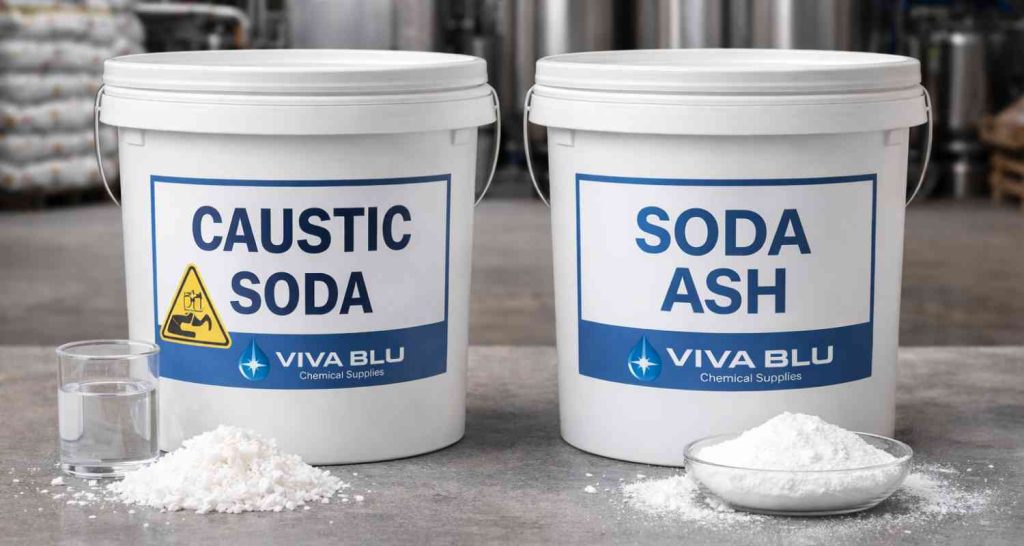
Caustic Soda Vs Soda Ash: Key Differences and Uses in Australian Industries
When businesses compare Caustic Soda vs Soda Ash, they need to understand chemistry, safety, handling, and industrial fit.
Australian industries use many alkaline chemicals in manufacturing, treatment, refining, and cleaning. Two of the most common are caustic soda and soda ash. Although both support industrial processes, they serve different roles. Each product has unique chemical behaviour, storage needs, and operating benefits. For Australian businesses, choosing the right one can improve safety, control costs, and support reliable output.
This topic is especially relevant in Australia because several major sectors depend on alkaline inputs. These sectors include alumina refining, glass manufacturing, water treatment, pulp and paper, textiles, detergents, and chemical processing. According to the Australian Aluminium Council, alumina refineries use sodium hydroxide in the Bayer process to extract alumina from bauxite. Meanwhile, national manufacturing data from the Australian Bureau of Statistics highlights the role of glass and related products in the wider industrial economy. These sectors show why careful chemical selection matters in real operations across the country.
Key Takeaways
- Sodium hydroxide is a much stronger alkali than sodium carbonate.
- One product is highly corrosive, while the other is generally easier to handle.
- Alumina refining depends heavily on the stronger alkaline chemical.
- Glass manufacturing relies on sodium carbonate as a major raw material.
- Water treatment plants may use either product based on treatment goals.
- Cleaning applications vary according to required reaction strength and formulation type.
- Storage and transport needs can influence chemical selection at remote sites.
- Equipment compatibility is a major factor in safe long-term use.
- The best industrial choice depends on process performance, not only on cost.
- Australian operators benefit from matching chemical choice with site conditions and compliance needs.
Why This Comparison Matters for Industry
Australian industrial operators need more than a simple chemical definition. They need to know how a product performs in real conditions. A chemical may work well in one process but create problems in another. Therefore, understanding the difference between these materials can help avoid equipment damage, waste, safety risks, and rising operating costs.
This decision also matters because Australian sites often operate under strict environmental and workplace rules. Many facilities are in remote or regional areas, where supply planning and safe handling are especially important. As a result, plant managers, procurement teams, and engineers benefit from a clear understanding of both products before making a purchasing or process decision.
A Brief Look at Caustic Soda
Caustic soda is the common name for sodium hydroxide. It is a strong alkali used in many industrial operations. It appears in solid forms such as flakes or pearls and in solution form for large-scale dosing systems. In many plants, caustic soda liquid is preferred because it supports easier transfer, storage, and dosing in continuous operations.
This chemical is widely valued for its high reactivity and strong ability to raise pH. It is also used in cleaning, refining, neutralisation, and chemical conversion. However, it is highly corrosive. Therefore, facilities using it must invest in proper tanks, pumps, pipework, and personal protective equipment to reduce risk during handling and use.
Chemical Identity and Strength
Sodium hydroxide has the formula NaOH. It dissociates completely in water and forms a strongly alkaline solution. Because of this, it acts quickly in processes that require rapid pH adjustment or aggressive alkaline conditions. This high strength makes it useful in demanding industrial systems.
However, this same strength increases its hazard profile. It can cause severe burns and damage many materials if handled incorrectly. In addition, it can produce heat during dilution. Therefore, operators usually follow controlled procedures for mixing, transfer, and emergency response to manage these risks safely.
Main Industrial Forms
Caustic soda is commonly sold as solids or as a liquid solution. Solid material can be useful where long shelf life and flexible storage are needed. Liquid form is usually preferred in larger facilities because it removes the need for on-site dissolving and supports smoother dosing control.
The chosen form often depends on site size, equipment design, and transport logistics. Large industrial users in Australia often prefer bulk liquid delivery for continuous operations. This is common in alumina refining, municipal treatment, and large manufacturing systems where constant supply and efficient application are essential.
Understanding Soda Ash
Soda ash is the common name for sodium carbonate. Its formula is Na2CO3. It is also an alkaline chemical, but it is weaker than sodium hydroxide. This makes it suitable for processes where moderate alkalinity is needed without the same level of corrosiveness or aggressive reaction.
Soda ash is widely used in glass production, detergents, chemicals, and selected water treatment applications. It can increase alkalinity and support pH balance in a more controlled way. Therefore, many manufacturers use it when a gentler alkaline effect is enough to meet production goals.
Light and Dense Grades
Soda ash is generally sold in light grade and dense grade. The chemistry is the same, but the bulk density is different. Light grade often dissolves faster, while dense grade offers better handling in high-volume industrial systems. This difference can affect storage, feeding, and batching performance.
Dense grade is widely used in glass manufacturing because it works well in automated batching systems. Light grade may suit applications where quick dissolution matters more than packing density. Therefore, buyers usually choose between these grades based on handling requirements rather than chemical strength alone.
Behaviour in Processing Systems
When soda ash dissolves in water, it forms an alkaline solution that is less aggressive than sodium hydroxide. This can help operators maintain better control in applications where rapid pH swings would create process instability. It can also reduce material compatibility concerns in certain systems.
Even so, soda ash still requires proper handling. Dust control remains important, especially during transfer and blending. In addition, moisture can affect storage quality and product flow. Therefore, dry storage conditions and careful material movement are still important in industrial settings.
How Their Properties Affect Practical Use
The properties of each chemical shape determine where and how it is used. Caustic soda is strongly alkaline, fast-acting, and highly corrosive. Soda ash is milder, less reactive, and often easier to manage in dry operations. These differences influence process design, training, equipment selection, and cost planning.
The way each product behaves in water is also important. Sodium hydroxide creates a very high-pH solution quickly. Sodium carbonate raises alkalinity more gently. Therefore, one is often chosen for aggressive chemical action, while the other is selected for steadier conditioning and formulation support.
Solubility and Reaction Profile
Caustic soda dissolves quickly and creates strong alkaline conditions almost immediately. This is useful in systems where fast neutralisation or strong reaction power is needed. Soda ash also dissolves in water, but its effect develops in a more moderate way. This gives operators more control in some applications.
This difference matters in treatment and process chemistry. Rapid pH correction can be valuable in emergency or high-demand systems. However, slower adjustment can be better where process balance matters more than speed. Therefore, engineers often choose between the two based on the required reaction profile.
Corrosion and Material Impact
Caustic soda is far more corrosive than soda ash. It can attack certain metals, coatings, seals, and surfaces if materials are not chosen carefully. This means plants using it often need more resistant infrastructure, such as specific plastics, lined tanks, or compatible alloys.
Soda ash is usually easier on equipment, although it can still create issues if dust, moisture, or concentrated solutions are not controlled. Because of this, some facilities choose sodium carbonate, where a less aggressive alkaline agent can meet the process target without heavy corrosion management costs.
Key Differences in Industrial Performance
The debate around Caustic Soda vs Soda Ash usually comes down to performance in specific tasks. While both are alkaline, they differ in strength, hazard level, storage needs, and application range. These differences are practical, not just chemical, and they shape outcomes on factory floors and treatment plants.
For example, a refinery may need strong digestion power and choose sodium hydroxide. A glass plant needs sodium carbonate as a raw material input, not as a cleaning agent. Therefore, the best product depends on the process objective, not simply on price or availability.
Strength and pH Control
Caustic soda gives a much stronger pH increase than soda ash. This makes it suitable for high-demand neutralisation, digestion, and heavy cleaning. However, the strong effect also means overdosing risks are higher. Therefore, accurate metering and monitoring are critical when it is used.
Soda ash offers a more moderate pH shift. This can be beneficial in applications where operators need a steadier rise in alkalinity. In these situations, the lower strength can support better control and reduce the chance of sudden process imbalance.
Handling and Safety Requirements
Handling needs differ sharply between the two products. Caustic soda demands strong safety measures because it is highly corrosive and can injure workers quickly. Storage, transfer, and emergency plans must all reflect this. In many cases, specialised equipment is necessary.
Soda ash still needs careful handling, especially in dusty environments, but the immediate corrosive risk is lower. This can simplify some aspects of storage and transfer. Even so, workplace safety practices remain essential for both materials in industrial settings.
Storage, Transport, and Site Logistics
Transport and storage also shape industrial choice. Liquid sodium hydroxide needs dedicated tanks and compatible unloading systems. Solid forms require dry handling and careful dissolution. Meanwhile, soda ash is commonly transported as a dry bulk material and stored in silos or sealed bags.
For Australian sites in regional areas, logistics can influence purchasing decisions. A plant may choose the form or product that fits available infrastructure and delivery schedules. Therefore, the chemical decision often includes transport planning and site capability, not just process chemistry.
Uses in Alumina and Mining Operations
Australia is one of the world’s major bauxite and alumina producers. In alumina refining, sodium hydroxide plays a central role in the Bayer process. The Australian Aluminium Council explains that alumina is extracted from bauxite using caustic soda under heat and pressure, making sodium hydroxide essential to refinery operations.
Soda ash has a smaller role in this space. However, it can still be used in selected support processes, including water conditioning and some chemical preparation functions. However, it is not the main digestion chemical in alumina refining. Therefore, in mining and alumina operations, the stronger alkali clearly has a more direct processing role.
Uses in Glass Manufacturing
Glass manufacturing is one of the clearest examples of where sodium carbonate is the preferred choice. Soda ash is a key raw material in glass batches because it helps lower the melting point of silica. This reduces furnace energy demand and supports more efficient glass production across container, flat, and specialty glass sectors.
Caustic soda is generally not used as a core glass batch ingredient in the same way. It may appear in cleaning or supporting operations, but not as the main alkali input for forming glass. Therefore, manufacturers in this industry rely much more on sodium carbonate than sodium hydroxide for primary production needs.
Uses in Water Treatment Systems
Both products can appear in water treatment, but their roles differ. Caustic soda is often used for rapid pH correction and neutralisation, especially where incoming water or process streams are acidic. It is useful when treatment systems need a strong and immediate alkaline adjustment.
Soda ash is often used where operators want to increase alkalinity in a more controlled way. It can help stabilise water chemistry and support treatment performance without the same aggressive effect. Australian water guidance materials commonly discuss pH and alkalinity management as central parts of treatment performance, which shows why product choice matters in these systems.
Uses in Pulp, Paper, and Textiles
In pulp and paper operations, sodium hydroxide is widely used in pulping, bleaching support, and cleaning. Its strong alkaline action helps break down lignin and supports fibre processing. This makes it a valuable chemical in operations that require aggressive treatment of raw material and equipment.
In textile processing, it is used in scouring, dye preparation, and finishing applications. Soda ash also has a role, especially in textile dyeing, where it can help fix reactive dyes by supporting the required alkaline conditions. Therefore, each chemical has value in the sector, but for different process reasons.
Uses In Detergents and Cleaning
Both materials appear in cleaning and detergent-related industries, but their uses differ by product type and strength requirement. Caustic soda is used in strong industrial cleaners and in soap production because it reacts well with fats and oils. It also supports heavy-duty cleaning in processing plants.
Soda ash is more common in powdered detergents and household cleaning formulations where builders and alkalinity support are needed. It helps soften water and improve cleaning performance. Therefore, product developers choose between them based on desired cleaning power, safety profile, and formulation behaviour.
Uses In Food and Chemical Processing
In chemical manufacturing, caustic soda supports many reactions, neutralisation steps, and feedstock adjustments. It is also used in selected food processing applications under controlled conditions, such as peeling, cleaning, and pH management. These uses require strict quality and compliance controls.
Soda ash is also used in chemical production, especially where sodium-based alkalinity or buffering is required. It may support formulation and intermediate manufacturing less aggressively. Therefore, both chemicals have value in processing industries, although their roles vary with reaction needs and plant design.
Cost, Efficiency, and Process Fit
Cost matters, but the lowest purchase price does not always mean the best value. A cheaper chemical can create higher equipment wear, more complex safety controls, or weaker process results. Therefore, Australian buyers usually look at total operating value rather than price per tonne alone.
Efficiency also depends on the process target. A plant needing strong, fast alkalinity may benefit from sodium hydroxide despite higher handling demands. A plant needing steady buffering or glass batch input may gain more value from sodium carbonate. Therefore, process fit is usually the deciding factor in long-term performance.
Choosing the Right Product for Australian Operations
The best choice depends on industry, equipment, handling capacity, and process objective. For aggressive chemical action, rapid pH control, and digestion, sodium hydroxide is often the better option. For glass production, controlled alkalinity, and selected formulation work, sodium carbonate is often more suitable.
Climate, transport distance, and workforce capability also matter in Australia. Regional sites may prefer products that match their storage systems and safety resources. Therefore, the smartest decision usually comes from combining chemistry knowledge with site reality, not from relying on a general rule.
FAQs
What Is the Main Difference Between the Two Chemicals?
The main difference is alkaline strength and corrosiveness. Sodium hydroxide is much stronger and more aggressive. Sodium carbonate is milder and often easier to handle. Therefore, they are used for different industrial goals rather than as direct substitutes.
Which One Is More Common in Australian Mining and Refining?
Sodium hydroxide is more important in alumina refining because it is used in the Bayer process. Australia has a major alumina industry, so this use is significant. Sodium carbonate has a smaller role in mining-related support functions.
Which Product Is Better for Water Treatment?
There is no single answer because treatment goals vary. If fast pH correction is needed, sodium hydroxide may be the better choice. If a steadier increase in alkalinity is preferred, sodium carbonate may suit the system better.
Why Is Sodium Carbonate Important in Glass Production?
It helps lower the melting point of silica in glass batches. This supports more efficient furnace operation and practical large-scale manufacturing. Because of this, it is a core raw material in many glass plants.
Is One Safer to Handle Than the Other?
Sodium carbonate is generally less hazardous during routine handling. However, it still requires dust control and proper storage. Sodium hydroxide is much more corrosive, so it needs stricter protective measures, equipment controls, and emergency planning.
Conclusion
In the Australian industry, both chemicals are valuable, but they solve different problems. One delivers strong and fast alkaline performance for demanding operations such as refining, heavy cleaning, and rapid neutralisation. The other supports-controlled alkalinity and plays a central role in glass and selected formulation processes.
For businesses comparing Caustic Soda vs Soda Ash, the right decision depends on process needs, safety capability, storage systems, and long-term operating value. When the chemical matches the application, plants can improve efficiency, protect equipment, and support safer day-to-day operations.