
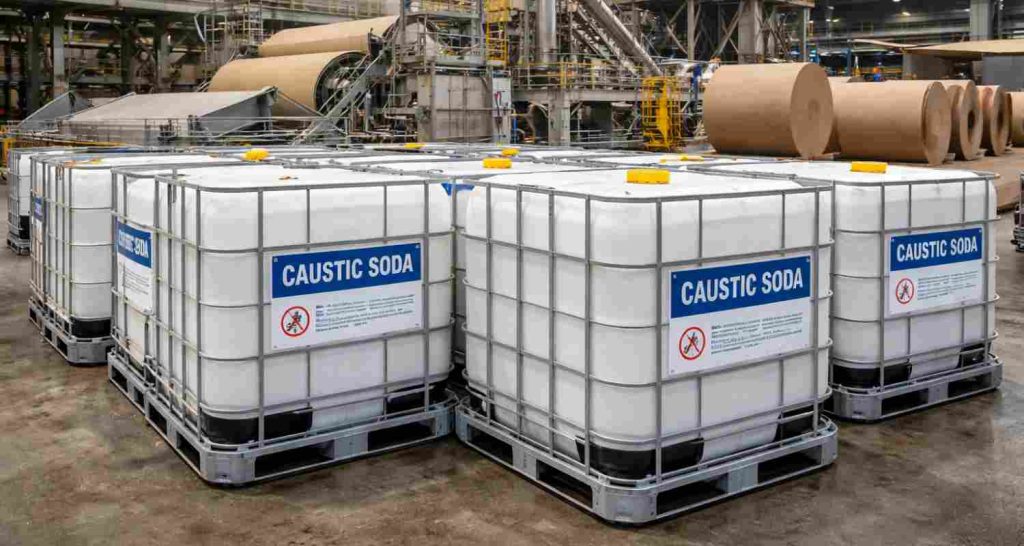
How Caustic Soda is Used in the Pulp and Paper Industry?
The caustic soda in pulp and paper industry plays a critical role in transforming raw wood into high-quality paper products used across Australia. From packaging materials to printing paper, this chemical supports efficiency, quality, and sustainability in modern manufacturing processes.
Australia’s pulp and paper sector continues to evolve with advanced chemical processes, where sodium hydroxide remains a foundational component.
Key Takeaways
- Sodium hydroxide plays a central role in pulp processing and fibre separation.
- It supports high-quality paper production across multiple stages.
- The chemical improves efficiency in pulping, bleaching, and recycling.
- It helps maintain proper pH levels in industrial processes.
- Recycling systems rely on it for effective deinking and fibre recovery.
- It contributes to cost savings through chemical recovery systems.
- Proper handling ensures workplace safety and compliance.
- It supports water treatment and recycling within mills.
- Sustainable practices benefit from its efficient chemical properties.
- It remains essential for modern paper manufacturing in Australia.
Understanding the Role of Caustic Soda
Caustic soda, also known as sodium hydroxide, is a strong alkaline chemical widely used in industrial applications. In pulp and paper production, it assists in breaking down wood fibres and removing unwanted components.
This chemical helps separate lignin from cellulose. As a result, manufacturers can produce cleaner and stronger pulp. The process improves both quality and consistency across paper products.
Importance in the Australian Paper Industry
Australia has a growing demand for sustainable paper and packaging. According to the Australian Forest Products Association, the sector contributes billions to the economy each year.
Chemical processes must meet strict environmental standards. Therefore, manufacturers rely on efficient and recyclable chemicals. Caustic soda supports these goals through recovery and reuse systems in mills.
Role in Wood Pulping Process
Chemical Breakdown of Wood
During pulping, wood chips undergo chemical treatment. Caustic soda helps dissolve lignin, which binds fibres together. This separation allows the extraction of usable cellulose.
As a result, the pulp becomes softer and easier to process. The method improves fibre quality and supports consistent production output.
Kraft Process Application
The Kraft process remains the most common pulping method. In this system, caustic soda works with sodium sulphide to break down the wood structure.
This process produces strong fibres suitable for packaging and industrial paper. Many Australian mills prefer this method due to its efficiency and recyclability.
Fibre Quality Improvement
High-quality fibres are essential for durable paper products. Caustic soda ensures effective removal of impurities.
Consequently, the final pulp has better strength and flexibility. This improves the performance of paper in various applications.
Contribution to the Bleaching Process
Removal of Residual Lignin
After pulping, some lignin remains in the fibres. Caustic soda helps remove these residues during the bleaching stages.
This step enhances brightness and improves the appearance of paper products. It also prepares pulp for further chemical treatments.
Enhancing Brightness Levels
Paper brightness is important for printing and packaging. Caustic soda supports bleaching agents by adjusting pH levels.
Therefore, bleaching chemicals work more efficiently. The result is a cleaner and more uniform final product.
Environmental Considerations
Modern bleaching processes focus on reducing environmental impact. Caustic soda supports eco-friendly methods by enabling controlled chemical reactions.
Australian regulations encourage mills to adopt cleaner production systems. This aligns with sustainability goals across the industry.
Use in Pulp Washing and Cleaning
Removal of Impurities
After pulping, fibres must be washed thoroughly. Caustic soda assists in removing dissolved lignin and other residues.
This cleaning process ensures high-quality pulp. It also prevents contamination in later production stages.
Improving Process Efficiency
Efficient washing reduces chemical waste. Caustic soda enhances the separation of unwanted materials.
As a result, mills achieve better recovery rates. This leads to cost savings and improved operational performance.
Supporting Water Recycling
Water use is a major concern in Australian industries. Caustic soda helps treat and recycle process water.
This reduces freshwater consumption. It also supports compliance with environmental standards.
Role in Paper Recycling
Deinking Process
Recycled paper requires the removal of ink and coatings. Caustic soda plays a key role in breaking down ink particles.
This allows easy separation during the flotation or washing stages. As a result, recycled fibres regain usability.
Fibre Recovery Enhancement
Efficient recycling depends on fibre preservation. Caustic soda helps maintain fibre strength during processing.
This ensures that recycled paper meets quality standards. It also supports circular economy initiatives in Australia.
Waste Reduction Benefits
Recycling reduces landfill waste. Caustic soda contributes to improving recovery rates.
Therefore, mills can reuse more material. This aligns with national sustainability targets.
Use in pH Control and Chemical Balance
Maintaining Alkalinity
Stable pH levels are essential in pulp processing. Caustic soda helps maintain the required alkaline conditions.
This ensures smooth chemical reactions. It also prevents damage to fibres and equipment.
Process Stability
Consistent pH levels improve production reliability. Caustic soda supports uniform processing conditions.
As a result, mills experience fewer disruptions. This enhances overall productivity.
Compatibility with Other Chemicals
Caustic soda works well with other pulping and bleaching chemicals. Its compatibility ensures efficient reactions.
This reduces chemical waste. It also improves process control across different stages.
Use in Equipment Cleaning
Removal of Residues
Industrial equipment accumulates deposits over time. Caustic soda helps remove these residues effectively.
Clean equipment improves operational efficiency. It also reduces maintenance requirements.
Preventing Contamination
Contaminants can affect paper quality. Regular cleaning with caustic soda prevents buildup.
This ensures consistent product standards. It also extends equipment lifespan.
Supporting Hygiene Standards
Clean systems are essential in paper production. Caustic soda helps maintain hygiene across processing units.
This is particularly important for food-grade packaging materials.
Role in Chemical Recovery Systems
Recovery of Spent Chemicals
Modern mills use recovery systems to reuse chemicals. Caustic soda plays a key role in this process.
Spent chemicals are treated and regenerated. This reduces overall consumption.
Cost Efficiency
Chemical recovery lowers operational costs. Caustic soda supports efficient regeneration cycles.
As a result, mills save resources. This improves profitability in the long term.
Environmental Impact Reduction
Recovery systems reduce waste discharge. Caustic soda contributes to cleaner production.
This aligns with Australian environmental guidelines and sustainability goals.
Use of Caustic Soda Liquid in Processing
In many facilities, caustic soda liquid is preferred for ease of handling and quick dissolution. Liquid form allows precise dosing in automated systems.
This improves process control and reduces manual handling risks. It also enhances safety and efficiency across production stages.
Safety and Handling Practices
Workplace Safety Measures
Caustic soda is highly corrosive. Workers must follow strict safety protocols.
Protective equipment is essential during handling. This reduces the risk of injury.
Storage Requirements
Proper storage ensures chemical stability. Caustic soda must be kept in suitable containers.
This prevents contamination and maintains quality over time.
Regulatory Compliance
Australian industries follow strict safety standards. Guidelines from Safe Work Australia help ensure safe chemical use.
Compliance reduces risks and promotes a safe working environment.
Environmental Benefits and Sustainability
Reduced Chemical Waste
Efficient use of caustic soda minimises waste. Recovery systems further enhance sustainability.
This reduces environmental impact. It also supports responsible manufacturing practices.
Support for Circular Economy
Recycling processes benefit from caustic soda. It enables the reuse of fibres and materials.
This aligns with circular economy principles. It also reduces reliance on raw resources.
Lower Carbon Footprint
Optimised chemical processes reduce energy use. Caustic soda contributes to efficient production.
This helps lower carbon emissions. It supports Australia’s environmental targets.
Industry Trends and Innovations
Advanced Chemical Technologies
Modern mills adopt advanced technologies for better efficiency. Caustic soda remains a key component in these systems.
Innovation improves chemical utilisation. It also enhances product quality.
Automation in Processing
Automation allows precise control of chemical dosing. Caustic soda use becomes more efficient.
This reduces waste and improves consistency. It also enhances safety.
Focus on Sustainability
Sustainability drives industry changes. Caustic soda supports eco-friendly processes.
Australian manufacturers continue to invest in greener solutions.
FAQs
What is the main function of caustic soda in paper production?
It helps break down wood into pulp by removing lignin. This process separates fibres and improves pulp quality. It also supports bleaching and cleaning stages.
Is caustic soda environmentally friendly?
It can be managed in an eco-friendly way. Recovery systems allow the reuse of chemicals. Proper handling reduces environmental impact significantly.
Why is pH control important in pulp processing?
Stable pH ensures efficient chemical reactions. It prevents damage to fibres and equipment. This improves product consistency and quality.
How does it support paper recycling?
It helps remove ink and contaminants from recycled paper. This allows fibres to be reused effectively. It also improves the quality of recycled products.
Is the liquid form better than the solid form?
Liquid form offers easier handling and precise dosing. It integrates well with automated systems. This improves efficiency and safety in industrial operations.
Conclusion
Caustic soda remains a vital component in the pulp and paper sector across Australia. It supports every major stage, from pulping to recycling, while improving efficiency and product quality. Modern mills rely on their versatility and compatibility with advanced systems.
As sustainability becomes more important, the role of this chemical continues to evolve. Efficient use, recovery systems, and strict safety practices ensure responsible manufacturing. With ongoing innovation, caustic soda will remain essential in shaping the future of the paper industry.